Debit & Credit

Debit & Credit: What’s the Difference
(and Why It Matters)
Credit and debit cards look nearly identical—but they work very differently. Knowing which one to use (and when) can help you avoid debt, build credit, and make smarter money moves.
LESSON 1
LESSON 1

Debit Cards 101

Spending Your Money

A debit card pulls money directly from your checking account.

For example, if you have $200 in the bank and you spend $50, your balance becomes $150—simple. Just don’t spend more than you have!

Pros:

  • No interest charges
  • Easier to avoid debt—spend only what you have
  • Real-time spending tracking
  • Works for in-store and online purchases

Cons:

  • Doesn’t build your credit score
  • Limited protection if your card is stolen
  • You can’t spend more than what’s in your account (which can be good or bad)
LESSON 2
Credit Cards 101

Borrow Now, Pay Later

A credit card lets you borrow money from a bank or lender—up to a limit. You get a monthly bill and must pay back at least the minimum payment, or face interest charges (and those charges can sure add up if you aren’t careful).

Pros:

  • Builds your credit score (that’s like a report card for how well grown-ups handle money)
  • Stronger fraud protection than debit cards
  • May offer rewards like cash back, points, or miles
  • Can cover emergencies if used wisely

Cons:

  • Easy to overspend
  • High interest rates if you don’t pay your monthly balance in full
  • Late payments = fees + credit score damage
  • Misuse can lead to long-term debt
  • Many credit card products include an annual fee to use
Explore debit vs. credit cards.
LESSON 3

Which Way to Pay

Debit vs. Credit: A Closer Look
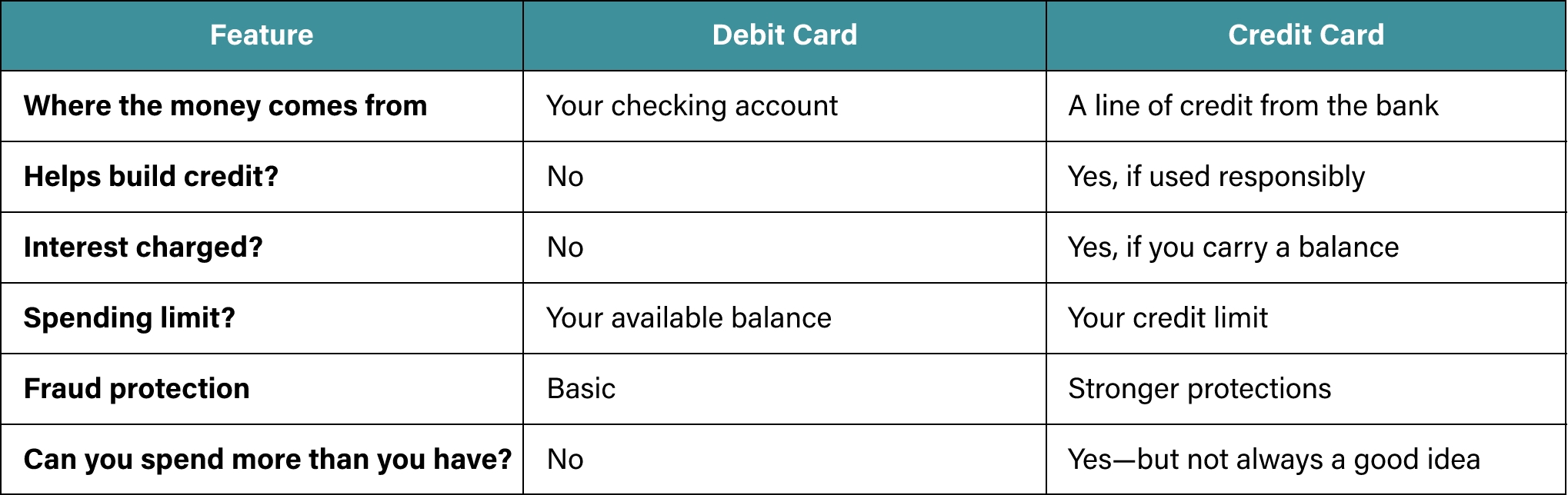
Debit Uses money from your checking account. Credit Uses money from a line of credit provided by a bank. Debit Limits you to spending only what you have in your account. Credit Uses money from a line of credit provided by a bank. Debit Purchases are immediate and taken directly from your account. Credit Allows you to pay for items later, since the money isn’t taken from your account. Debit Offers basic fraud protection for purchases. Credit Offers stronger fraud protections and easier dispute processes if something goes wrong. Debit Does not charge you interest on purchases. Credit Can charge you interest on purchases if you carry a balance or miss payments.

Debit Uses money from your checking account. Credit Uses money from a line of credit provided by a bank. Debit Limits you to spending only what you have in your account. Credit Uses money from a line of credit provided by a bank. Debit Purchases are immediate and taken directly from your account. Credit Allows you to pay for items later, since the money isn’t taken from your account. Debit Offers basic fraud protection for purchases. Credit Offers stronger fraud protections and easier dispute processes if something goes wrong. Debit Does not charge you interest on purchases. Credit Can charge you interest on purchases if you carry a balance or miss payments.
Let’s see what you learned.
Next up:

Budgeting

Overdraft fees

An overdraft fee is a penalty for using more money than you have.

Interest rate

An interest rate for credit is the extra money you have to pay on top of what you borrowed. If you don’t pay your bill in full, credit card companies will charge you more than what you owe. The percentage can be different for each company.

FDIC

This is a group that helps keep your money safe if something goes wrong.

Secured credit card

A secured credit card is a type of credit card that lets you borrow money, but you have to deposit your own money first. If you pay your bill on time, you can get the deposit back.

ATM

An ATM is a machine where you can get cash or check your bank account balance without having to go to the bank.

Two-factor authentication

This is a way to keep your accounts safe. When you log in with your password, it sends a code to your phone or email to make sure it’s really you.

Card Suite Life

First Security Bank’s Card Suite Lite app lets you set spending limits, track card activity in real time, freeze or unfreeze your card instantly, and review alerts so you can spot suspicious activity early.

Credit Report

A credit report is a record that shows banks and lenders how responsible you are with borrowing and paying back money.

Credit Score

A credit score is a three-digit number that tells lenders how good you are with borrowed money. It helps them determine whether or not they can trust you to pay back what you owe.