

Bank Accounts
Opening checking and savings accounts–and understanding how they work–is the first step to smart money management. Here’s everything first-time account holders – and the adults helping them – need to know about these building blocks for a strong financial foundation.
Checking Accounts
Savings Accounts
Opening an Account
Debit Cards
Safety and Security

Checking Accounts
Getting Paid and Paying the Bills
A checking account allows you to deposit and access your money when you need it.
- You can spend directly from a checking account by using your debit card, writing a check, or by taking out cash at an ATM.
- Your checking account is a great place to hold your allowance, birthday money, or other cash until you’re ready to use it.
Explore parts of a check.
LESSON 2
Savings Accounts
Make Your Money Work for You
Saving is not just about stashing money—it’s about making it grow while you just sit and chill.
- Savings accounts pay interest, which means the bank adds money to your balance just for leaving it there.
- The magic of compound interest means the money you earn also earns money over time.
- Even small amounts make a big difference, if you stay consistent.
Example: Saving $25/month at 2% interest = $1,579 in 5 years.
See savings in action
LESSON 3
Opening an Account
Get Started with a Bank Account
You got this. Opening an account is easy, but there are a few things you generally need to get started. They are:
A government-issued ID
(driver’s license, passport, or state ID)
(driver’s license, passport, or state ID)
Social Security Number or Tax ID
Proof of address (like a utility bill or lease)
Most banks let you open accounts online or in person (we do!). And while you might think all banks look the same, what they offer can vary a lot. It’s best to compare a few to find the right one for you. Here are some key things to look for:
No monthly maintenance fees
No or low minimum balance requirements
Free mobile banking app and easy customer service
A network of ATMs near you
Did You Know?
A regional bank (like First Security Bank) often offers better rates and lower fees than big-name banks.
Debit Cards
What’s the Deal with Debit Cards?
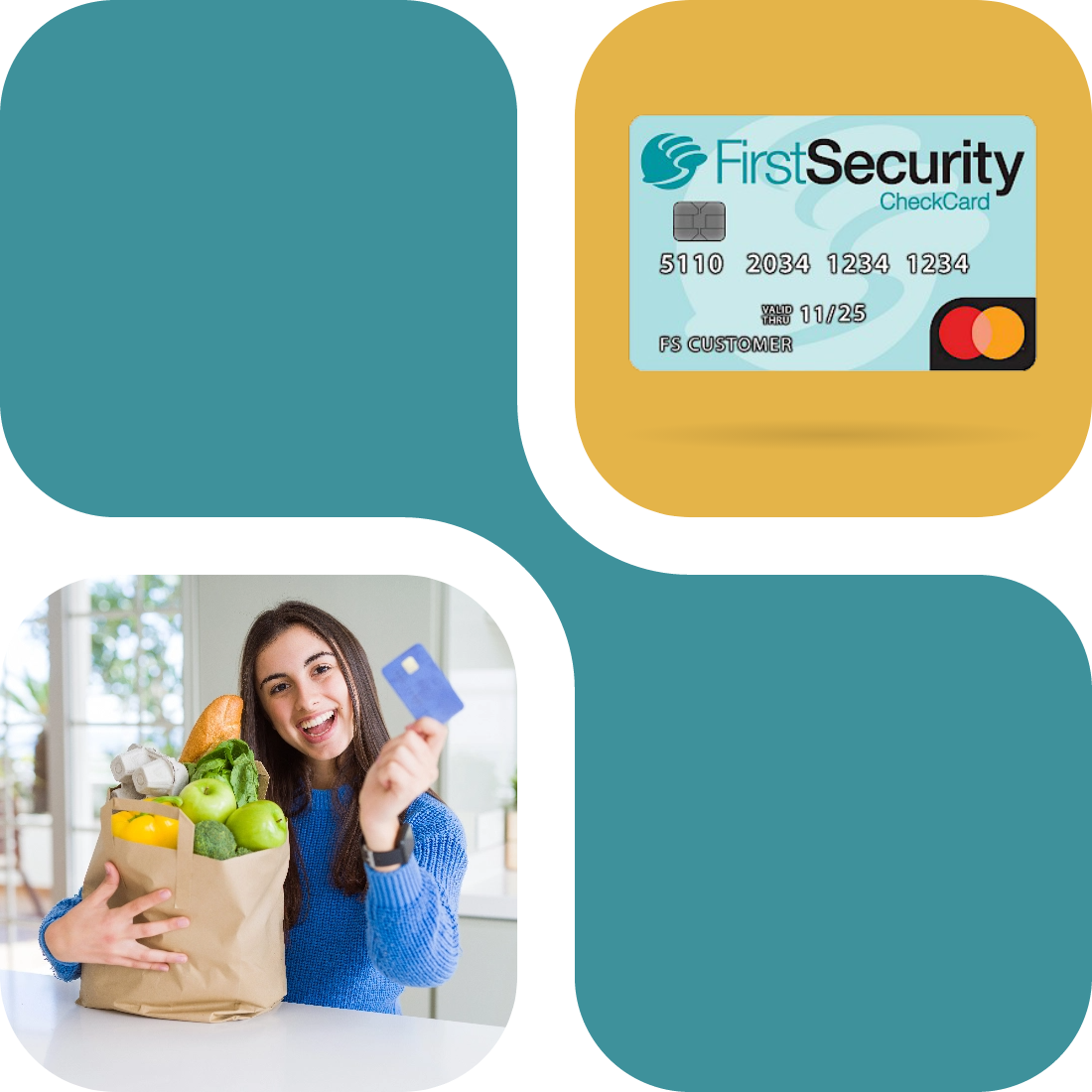
A debit card is your direct line to your money. It pulls funds straight from your checking account, so it’s a lot like cash without the worry of carrying it all on you (that’s a relief). There’s also no borrowing (or credit) involved.
Here are some things to use your debit card for:
- Buy school supplies, a new chapter book, or a sweet treat
- Pay online
(just like a credit card, but from your checking account balance) - Access cash from ATMs
Debit Cards: Key Perks
- Instant access to your money
- No interest fees or bills to pay
- Easy to track your spending in real-time
But there are limits…
- You can only spend what you have
- Less protection than credit cards in some fraud cases
- Doesn’t help build your credit score
Safety and Security
Banks are the Safest Place to Keep Your Money
We’ve all had a secret hiding place for our money in our house. But that’s not the best idea. Even cash in your wallet can get lost, stolen, or… spent too fast. But when your money is in the bank, it’s protected while also remaining easily accessible.
Here’s how:
- FDIC insurance covers your account up to $250,000
- Banks offer PIN protection, mobile alerts, and transaction freezes if your card is lost
- Most banks have 24/7 fraud monitoring
Did You Know?
If you’ve lost your debit card, your bank can help you instantly freeze your account until you find it or get a new card.

Let’s see what you learned.
